
Search "best CRM for startups" and you get a wall of near-identical listicles: twelve tools, twelve feature tables, and a winner that happens to be whatever the publisher sells or has an affiliate deal with. Most of them are written by CRM vendors. None of them answer the question a founder is actually asking, which is not "what are the twelve CRMs" but "which one do I pick right now so I do not have to think about this again until Series A."
A startup's CRM problem is different from an enterprise's. You have no admin to configure anything, no budget to waste, and no patience for a six-week rollout. You also have a second pipeline most CRM advice forgets exists: fundraising. The best CRM for a startup is the one that gets out of your way today and is still the right tool in eighteen months when you have a sales team and a board deck to fill. This guide covers what to actually look for, the shortlist that holds up, how it maps to your stage, and the pattern most experienced founders end up running.
In this article
1.
2.
3.
4.
5.
6.
7.
8.
What a startup actually needs from a CRM
Strip out the enterprise feature lists and a startup CRM has to do four things well.
Cheap or free to start
At pre-seed and seed, every recurring cost gets questioned. A CRM that costs real money per seat before you have revenue is a CRM the team will resist. The right answer is a free plan you can actually run a business on, not a stripped trial that nags you to upgrade by week two.
Fast to set up and obvious to use
You do not have an operations hire who lives in the CRM. Whatever you pick has to be usable by a founder in an afternoon and by the first sales hire without a training session. A tool that needs configuration before it does anything useful will sit empty, and an empty CRM is worse than a spreadsheet.
Survives your next stage without a migration
This is the most expensive mistake founders make. You pick the simplest tool at seed, outgrow it the month you raise, and spend the first quarter post-raise migrating data instead of selling. The best startup CRM has a free tier you start on and a paid tier you grow into, so the tool changes plans, not platforms.
Handles more than one pipeline
Early-stage companies run at least two relationship pipelines at once: customers and investors. Often a third for partnerships or hiring. A CRM that only models a single sales funnel forces the fundraise into a spreadsheet, which is exactly where investor follow-ups go to die.
A CRM that does all four is one your team will keep updated. A CRM that does two or three becomes a graveyard within a quarter.
The shortlist startups actually consider
A handful of tools come up over and over in founder conversations. Choosing between them is mostly about how technical your team is, how much of your workflow already lives somewhere else, and whether you are optimizing for simplicity now or runway to scale.
HubSpot
The default starting point for most startups, and for good reason. The free CRM covers unlimited contacts, companies, deals, a pipeline view, and email logging at no cost, which is enough to run real sales motion through dozens of opportunities. The paid Sales Hub tiers add sequences, automation, and reporting when you need them, and there is a startup program with steep first-year discounts for venture-backed companies.
The strongest argument for HubSpot is the runway. The free tier is genuinely usable rather than a demo, and the paid tiers scale to a real sales team without a platform change. The activity timeline on every contact and deal is the single most useful feature for a growing team, because it lets a new sales hire pick up a relationship the founder started without a handoff meeting. If you want the longer comparison of where HubSpot is strong and weak, the HubSpot alternatives breakdown covers the field.
The weakest argument is that HubSpot has opinions. It wants to be your CRM in a specific shape, and founders who try to bend it into a project tracker get frustrated. Use it for the pipeline and the relationship, not for delivery work.
Pipedrive
The most common alternative for small B2B startups that just want a clean sales pipeline. Cheaper entry price than HubSpot's paid tiers, a deliberately narrow product, and a pipeline UI that is hard to misuse. If your only requirement is "track deals through stages," Pipedrive is faster to set up and harder to mess up.
The trade-off is that marketing and automation lag HubSpot by a wide margin, and there is no free tier, only a trial. Startups that expect to run inbound marketing alongside sales tend to outgrow it.
Folk and Attio
The two modern entrants founders bring up most. Folk feels like a contact app, with smart imports from LinkedIn and Gmail and a UI closer to Notion than Salesforce. It is excellent for relationship-led founders tracking warm pipeline and investor relationships, and lighter on structured reporting. Attio is the more powerful of the two, a flexible data-model CRM that data-minded and SaaS startups like because you can shape the objects around your business rather than the other way around. Both are strong for a B2B startup that values flexibility, and both are thinner than HubSpot on marketing automation.
Notion as a DIY CRM
Plenty of founders start by building a CRM in Notion, and for the first stretch it works. Linked databases for contacts, companies, and deals, a board view for the pipeline, and you have a free CRM shaped exactly like your business. For a solo founder tracking ten prospects, this is genuinely enough.
It breaks down predictably. There is no automatic email logging, no sequences, no native pipeline reporting, and no activity timeline, so every interaction is manual data entry that quietly stops happening as deal volume grows. We wrote the full version of this in our complete Notion CRM guide, and the short version is that Notion is the best place to think about your pipeline and the worst place to report on it.
Matching the CRM to your stage
A rough mapping that holds up in practice.
Notion if your volume is low and you want the flexibility; HubSpot free if you expect to scale and want to avoid a migration later.
A real pipeline and an activity timeline from day one, at no cost, that upgrades in place when you need automation. This is where a homegrown Notion CRM starts costing more in upkeep than a real tool.
HubSpot Sales Hub for most teams; Attio if your data model is genuinely non-standard. The automation and reporting are what separate this stage from the lighter tools.
The fundraising pipeline most startup CRM advice ignores
Almost every "best CRM for startups" article treats the CRM as a sales tool and stops there. For an early-stage company, that misses half the job. The fundraise is a pipeline too, and it runs on exactly the same mechanics as sales: a list of targets, stages of progression, follow-ups that have to happen on time, and a close.
The founders who run a tight raise model it as a second pipeline inside the same CRM, with stages built for investor outreach rather than sales: researching, warm intro requested, first call, partner meeting, deep dive, term sheet. Each investor is a contact, each fund is a company, and the next step on every one is visible in a single board view. HubSpot, Pipedrive, and Attio all support multiple pipelines cleanly, so the raise gets the same discipline as the sales motion instead of living in a spreadsheet that goes stale the week the round gets hard.
Where the standard advice falls short
The shortlist above is fine. The problem is that the typical startup CRM article ends there, and the parts that actually trip founders up never get addressed.
The free-tier trap
"Free" is the most common filter founders apply, and it is the wrong primary filter. A free CRM you have to abandon at Series A costs you a migration, retraining, and lost momentum at the worst possible time. Optimize for the tool you can grow into, then take the free tier of that tool.
The empty-CRM problem
A CRM only works if it reflects reality, and it only reflects reality if updating it is nearly free. Tools that require manual logging of every call and email get updated for two weeks and then abandoned. The features that quietly matter most are the ones that capture activity automatically. This is the same reason getting reps to actually update the CRM is a setup problem, not a discipline problem.
The thinking-versus-tracking split
A CRM is built to hold structured data: stages, dates, values, owners. It is not built to hold the qualitative narrative of a deal or an investor relationship. Founders who force that into the CRM notes field end up with notes nobody reads, and founders who keep it in Notion end up with two systems that do not talk to each other.
That last point is where most startup CRM setups quietly fall apart. The structured side works. The qualitative side gets neglected or siloed in Notion. And the founder who needed the full context most, prepping for an investor follow-up or a renewal call, opens the CRM record and sees a name and a date.
The pattern that holds up
The setup that consistently shows up at well-run startups is not "the perfect CRM." It is two tools with a clear division of labor.
Notion holds the thinking: product notes, account strategy, meeting notes from sales and investor calls, the running narrative of each relationship, fundraise research. This is the layer the team writes in, because it is a better writing environment than any CRM. If you have not structured it yet, the Notion sales workspace setup is the place to start.
HubSpot holds the structure: the sales pipeline, the fundraise pipeline, contact and company records, email logging, and the activity timeline the whole team can see and report from. The deeper version of why these two tools complement rather than compete is in HubSpot vs Notion.
Notion is where a founder thinks. HubSpot is where the team reports. The link between them is what keeps the thinking from disappearing.
The bridge is the part most teams miss. A founder writes a detailed call summary in Notion, and the HubSpot record shows nothing. The first sales hire, prepping for the next conversation a month later, has no context. The thinking happened in Notion, the decision gets made in HubSpot, and without a sync layer the context dies in between. This is exactly what the hidden cost of copy-pasting notes between Notion and HubSpot breaks down in detail.
Notion plus HubSpot with a sync
- Thinking written where founders actually write
- Sales and fundraise pipelines tracked where the team reports
- A new sales hire inherits full context, not a name and a date
- The investor record reflects the real reason a fund leaned in or passed
Forcing it into one tool
- Qualitative narrative jammed into a CRM field nobody reads
- Or stranded in a Notion workspace the CRM never sees
- The next conversation starts from scratch
- The raise goes stale in a spreadsheet the week it gets hard
Sync Your Startup's Notion Notes to HubSpot in One Click
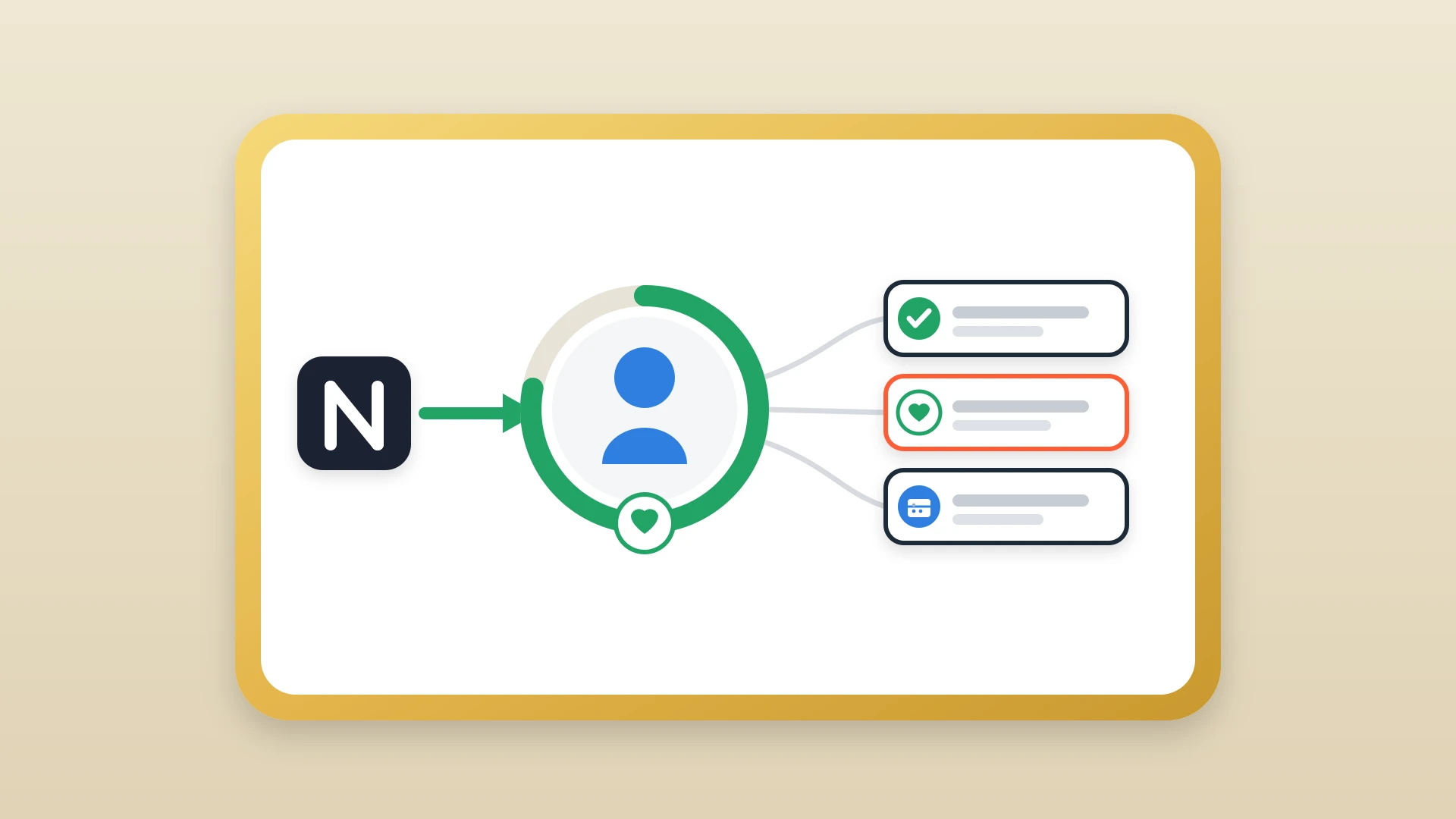
NoteLinker pushes meeting notes and account strategy from Notion onto the matching HubSpot contact and deal timelines, so your whole team sees the same context.
How to actually make the choice
A short framework that holds up.
- 1
Pre-seed solo founder
Tracking a handful of conversations, start with HubSpot free or a Notion CRM. Either carries you to the next stage. Lean HubSpot if you expect to hire and scale soon, Notion if you want maximum flexibility and your volume is genuinely low.
- 2
Seed-stage with a first hire or active raise
Default to HubSpot free and set up two pipelines on day one: sales and fundraising. Add Notion alongside it for the qualitative work rather than waiting until something falls through the cracks, and connect the two so the HubSpot timeline reflects what is happening in Notion. The two-minute Notion to HubSpot sync guide covers the bridge end to end.
- 3
Series A with a sales team and board reporting
Run HubSpot Sales Hub as the system of record, or commit to Attio if your data model is truly non-standard. Treat the CRM as the source of truth for structured data and keep Notion as the thinking layer, with a sync between them so nothing qualitative gets stranded.
And if you find yourself comparing this to an agency or services setup, the same logic with a different shape is in the best CRM for agencies, where retainers replace fundraising as the pipeline everyone forgets to model.
The best CRM for a startup is not the one that wins the feature comparison. It is the one your team will keep updated when you are heads-down shipping and the next investor call is tomorrow. For most startups, that is HubSpot for structure, Notion for thinking, and a sync layer between them that makes the thinking visible to the people who need it. The founders who get this right do not pick one tool. They pick the right job for each.