
A customer onboarding checklist takes a new account from signed to first value in five phases: sales handoff, kickoff, setup, first value, and transition to ongoing success. Here is the template to run for every customer; who owns each phase and the common mistakes follow it.
The customer onboarding checklist template
Run this checklist for every new account and adjust the specifics to your product or service.
Phase 1: Sales handoff (before kickoff)
- Closing rep documents goals, stakeholders, timeline, and promised outcomes.
- Internal handoff meeting between sales and the onboarding owner.
- Onboarding owner confirms who the customer champion and decision maker are.
- Account record updated so nothing lives only in the rep's head.
Phase 2: Kickoff
- Kickoff call scheduled within days of close, not weeks.
- Confirm the customer's goals and definition of success out loud.
- Agree a timeline and the target date for first value.
- Name owners on both sides and share the plan in writing.
Phase 3: Setup and configuration
- Provision accounts, access, and any integrations.
- Import or connect the customer's data.
- Complete the core configuration needed for the first outcome.
- Confirm the customer team is trained on the part they touch.
Phase 4: First value
- Customer completes the first real workflow end to end.
- Confirm the outcome matches what they bought for.
- Capture a quick win to share internally on their side.
- Check in on blockers before they become silent frustration.
Phase 5: Transition to ongoing success
- Build a success plan for the next quarter.
- Schedule recurring check-ins and the first business review.
- Formally hand off from onboarding to the ongoing owner.
- Confirm the renewal date and who owns it.
The first business review you schedule in phase 5 is the quarterly business review, and a clean onboarding is what makes that first QBR a story about results instead of a scramble to catch up.
In this article
1.
2.
3.
4.
5.
6.
7.
Why a customer onboarding checklist matters
Onboarding is where churn is won or lost. A customer who reaches their first real outcome quickly renews almost on autopilot; a customer who never quite gets set up churns no matter how good the product is. The checklist matters because it turns a fuzzy, easy-to-skip stretch of the customer lifecycle into a repeatable sequence with owners and dates.
The weeks right after a deal closes are when a customer decides whether they made the right call, and a vague, ad-hoc onboarding is the easiest way to lose them. Onboarding gets neglected because it falls in the gap between teams. Sales closed the deal and moved on; customer success has not fully picked it up. The checklist exists to close that gap on purpose.
A customer decides whether to renew long before the renewal date. They decide it during onboarding.
The five phases of customer onboarding
Every onboarding, whether you call it customer or client onboarding, moves through the same five phases. The onboarding checklist template breaks these phases into concrete, owned steps.
1. Sales handoff
Everything the closing rep learned, the goals, the stakeholders, the timeline, the promised outcomes, transfers to whoever owns delivery. Skip this and onboarding starts by re-asking questions the customer already answered.
2. Kickoff
A call that confirms goals, sets expectations, agrees a timeline, and names the success criteria. This is where you turn a signed contract into a shared plan.
3. Setup and configuration
The technical or operational work to get the customer live: accounts, integrations, data, access, or for services, scoping the first deliverable.
4. First value
The moment the customer gets the outcome they bought for the first time. The entire checklist is designed to reach this point as fast as realistically possible.
5. Transition to ongoing success
Onboarding ends by handing the account to the ongoing relationship: a success plan, a schedule of check-ins, and the first review on the calendar.
Who owns customer onboarding
A checklist without owners is a wish list. Onboarding touches several roles, and the checklist should name exactly who does what.
The closing sales rep
Owns the handoff. Their job is to transfer context completely, not to disappear the moment the deal is signed.
The onboarding or customer success manager
Owns the checklist end to end: kickoff, setup, first value, and the transition. In SaaS this is the central role.
The account or project lead (agencies)
In a services business, this person owns client onboarding: scope, kickoff, and the first deliverable. See Notion client management for the agency workflow.
The customer champion
The counterpart on the customer side who drives internal adoption. Onboarding stalls fast without one, so identify them in phase 1.
Common onboarding mistakes to avoid
Most onboarding failures come from the same handful of habits.
Onboarding that retains
- Explicit handoff from sales to delivery
- Tied to a target time-to-value
- Every step has an owner and a date
- The plan is visible to the whole account team
Onboarding that churns
- Sales closes and vanishes
- No deadline, so it drifts for months
- Steps with no clear owner
- The plan lives in one person's inbox
The most damaging one is the broken handoff. The rep who closed the deal knows the goals, the stakeholders, and what was promised, and if that never reaches the onboarding owner, the customer has to re-explain everything, which is exactly the wrong first impression. It is the same failure covered in the sales-to-customer-success handoff, and the fix is to make the handoff a real step with an owner, not an assumption.
Where to run your onboarding checklist
A checklist only works if the people running it can all see it. The problem most teams hit is that the checklist lives in one tool while the customer record lives in another. Sales works in HubSpot; the onboarding checklist gets built in Notion or a project tool; and the two never meet, so the rep who closed the deal has no idea how onboarding is going.
Most teams build the checklist in Notion, because it handles phased checklists, owners, and dates cleanly, and the account plan and meeting notes are already there. The gap is visibility: HubSpot cannot see the Notion checklist.
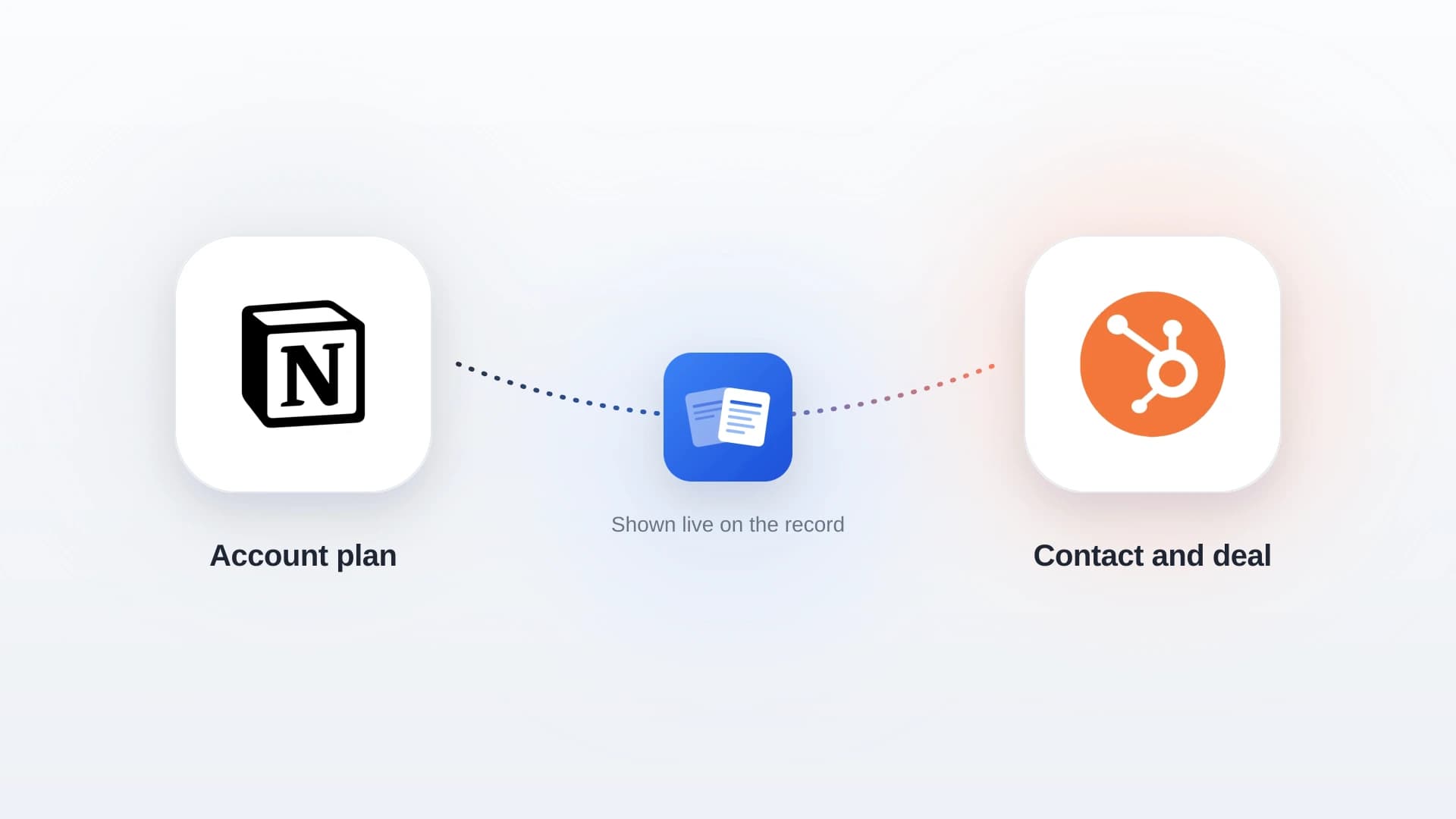
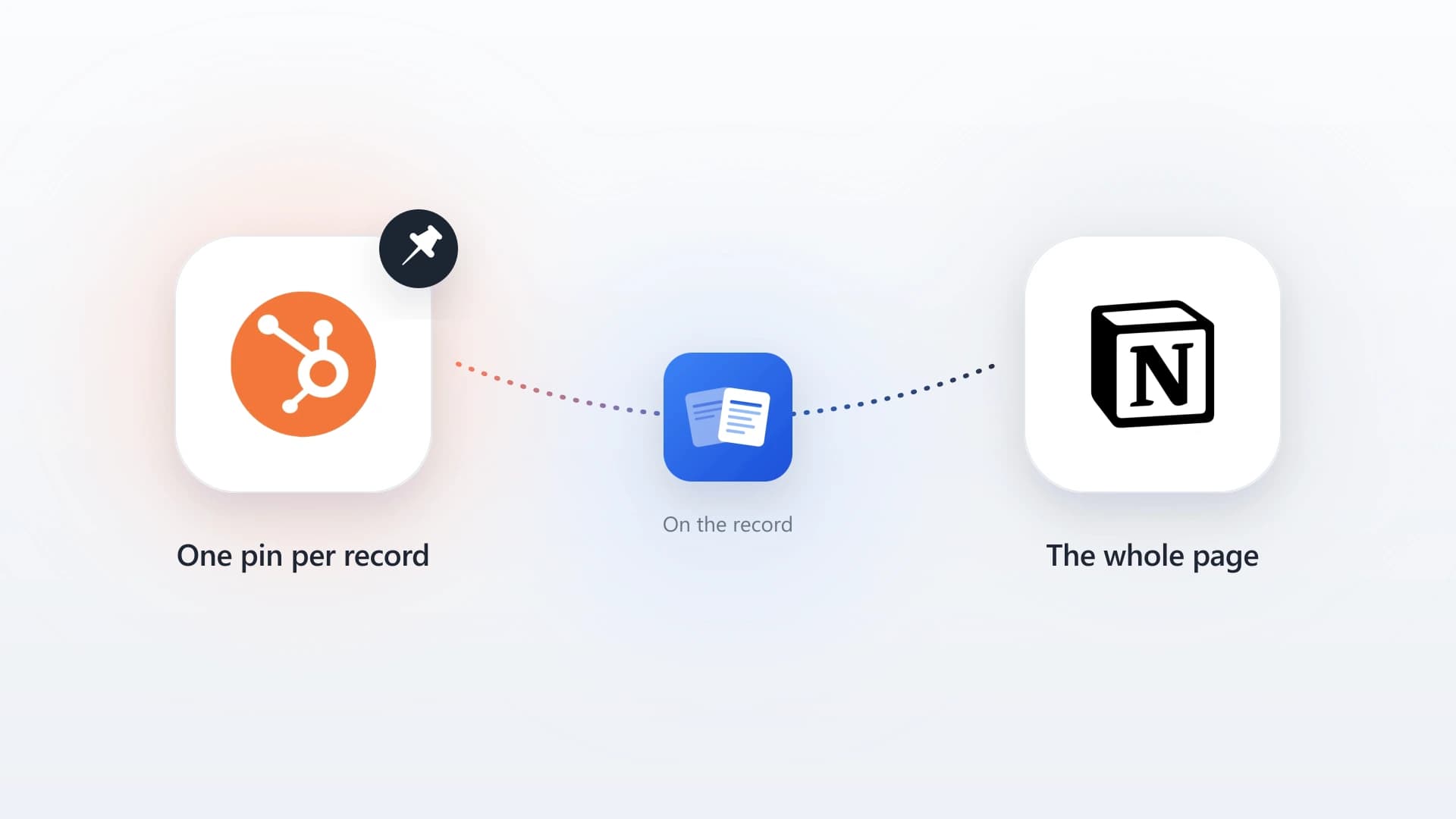
Build the checklist in Notion, then use NoteLinker so it shows on the matching HubSpot contact and deal. Sales and CS see the same live progress without status pings.
Workable for light onboarding, but HubSpot's flat note editor makes a real phased checklist with owners painful to maintain.
Fine for the delivery team, but it disconnects onboarding from the customer record, so the rest of the revenue team is flying blind.
Put your onboarding checklist on the HubSpot record
NoteLinker surfaces the Notion checklist your team runs onboarding from directly on the matching HubSpot contact and deal, so sales and customer success work from one live source.