
Here are 40 sales discovery questions you can bring into your next call, organized into the eight categories that matter. The habits that make any question land, how to sequence the call, and where to keep the answers follow the list.
Sales discovery questions by category
Here is the bank. Treat it as a menu, not a script. Pull the questions that fit the conversation and skip the ones you already have answers to.
1. Context and opening questions
Set the stage and understand who you are actually talking to before you dig into the problem.
- What made you take this call now?
- Before we dive in, what were you hoping to get out of this conversation?
- Walk me through what your team does day to day.
- How is your team structured, and where does this problem sit inside it?
- What's your role in a decision like this?
2. Current process and tools questions
You cannot sell a better way until you understand the current way in detail.
- How are you handling this today?
- What tools are involved in that process right now?
- Who touches that workflow, from start to finish?
- What happens when a step in that process breaks?
- How much time does that take your team in a typical week?
3. Pain and impact questions
This is the center of the call. Get the problem in their words, then get the cost.
- What made you start looking for a different way to do this?
- What does that problem cost you, in hours, money, or missed deals?
- Who on your team feels that pain the most?
- If nothing changes in the next six months, what happens?
- You mentioned it's frustrating. Tell me more about that.
A pain the prospect cannot put a number on is a pain they will not pay to solve.
4. Budget and resourcing questions
You rarely get a hard number on a first call, and that is fine. You are after signals.
- Have you set aside budget for solving this, or are you still building the case internally?
- What are you spending on this problem today, even if it's just time?
- How does your team usually evaluate and buy tools like this?
- What would need to be true for this to be worth paying for?
5. Decision process and authority questions
Map the buying committee early so week six does not surprise you.
- Besides you, who else cares about getting this right?
- Walk me through how a decision like this usually gets made on your team.
- Who signs off on a purchase at this size?
- Have you bought something like this before? How did that go?
- Is there a security or procurement review we should plan around?
6. Timeline and urgency questions
Capture the event behind the date, not just the date.
- When do you need this solved by, and what's driving that date?
- Is there an event, deadline, or renewal pushing the timeline?
- What's your ideal go-live?
- What has to happen on your side between now and then?
7. Competition and alternatives questions
Find out what you are really up against, including the option to do nothing.
- What else are you considering?
- Have you tried to solve this before? What happened?
- What would make you choose one option over another?
- What do you like, and dislike, about your current setup?
8. Closing and next-step questions
End every call with a written, owned next step or the deal does not really exist.
- Based on what we covered, does it make sense to keep going?
- What questions do you have for me?
- Who else should be in the next conversation?
- What's the best next step from your side, and by when?
In this article
1.
2.
3.
4.
5.
6.
7.
What makes a discovery question actually work
Discovery questions are only as good as the way you ask them. Four habits separate a real discovery conversation from a survey.
A discovery call is the widest window you get into a prospect's world, and it closes fast. Gartner's B2B buying research found that buyers spend only 17% of their entire purchase journey meeting with potential suppliers, and that shrinks further when they are comparing several vendors at once. The handful of questions you ask in that window shape every follow-up email, demo, and proposal that comes after. So they have to earn their place.
Keep it open-ended
"Are you happy with your current tool?" gets a yes or no. "What works and what frustrates you about your current tool?" gets a paragraph. Phrase questions so the prospect has to explain, not confirm.
Ask one thing at a time
Stacked questions ("What's your budget, timeline, and who else is involved?") get you a partial answer to the last one. Ask a single question, then stop talking and let the silence do the work.
Follow the thread
The scripted question opens the door; the follow-up is where the value is. When a prospect says "it's been a headache," the next words out of your mouth should be "tell me more about that," not the next item on your list.
Tie everything back to impact
A problem the prospect cannot quantify is a problem they will not spend money to fix. For every pain point, get to the cost: hours, dollars, missed deals, or team frustration.
Discovery call questions vs discovery meeting questions
People search for "discovery call questions" and "discovery meeting questions" as if they are different things. They are the same underlying job: understand the prospect's situation well enough to know whether and how to help. The only real difference is format. A call is usually shorter and one-to-one, so you prioritize pain, budget, and timeline. A scheduled discovery meeting, especially with several stakeholders in the room, gives you room to run the full eight categories and to ask each person what a good outcome looks like from their seat.
Whichever format you are in, the mistake is the same: treating the question list as a checklist to complete rather than a set of threads to pull.
How to sequence a discovery call
A good discovery call has a shape. Questions asked in the wrong order feel like an interrogation; asked in the right order they feel like a conversation.
- 1
Open with context, not pain
Start with the opening questions. Understand their role and why they took the call before you start poking at problems. It earns the right to go deeper.
- 2
Move into current process
Get them describing how things work today. This is low-threat, and it surfaces the pain points naturally without you having to pry.
- 3
Go deep on pain and impact
Once a problem surfaces, stay on it. Follow up until you have the cost in real terms. This is the part of the call that funds the deal.
- 4
Qualify budget, authority, and timeline
Now that the prospect sees the value of solving the problem, the qualifying questions feel earned rather than transactional.
- 5
Close on a concrete next step
Confirm the next action, the owner, and the date before you hang up. Write it down while you are still on the call.
Common discovery question mistakes
Three habits quietly wreck otherwise good calls.
Rattling through the list
Asking all 40 questions at speed is not thorough, it is exhausting for the prospect. Pick the threads that matter and go deep on those.
Skipping the impact follow-up
Collecting problems without ever asking what they cost leaves you with a list of complaints and no business case. Always get to the number.
Not writing the answers down where the team can see them
The most insightful discovery call is worthless to the deal if the answers live only in your head or a personal notepad. The next person to touch the account has to be able to read them.
Notes that never reach the team are where most discovery value leaks out, so the problem is worth solving properly.
Where to keep your discovery questions and answers
The answers to these questions are the most valuable notes in your CRM, and they are also the ones most likely to go missing. The problem is that the tool that is best for writing structured discovery notes is often not the tool the rest of your team lives in.
Many sales teams write discovery notes in Notion, because it is easy to build a database where every call is a row with the same fields (pain, budget, timeline, next step) and creating a new note is one click. The catch is that HubSpot cannot see any of it. For how to structure those notes in the first place, see how to take discovery call notes that close deals and the reusable sales call notes template.
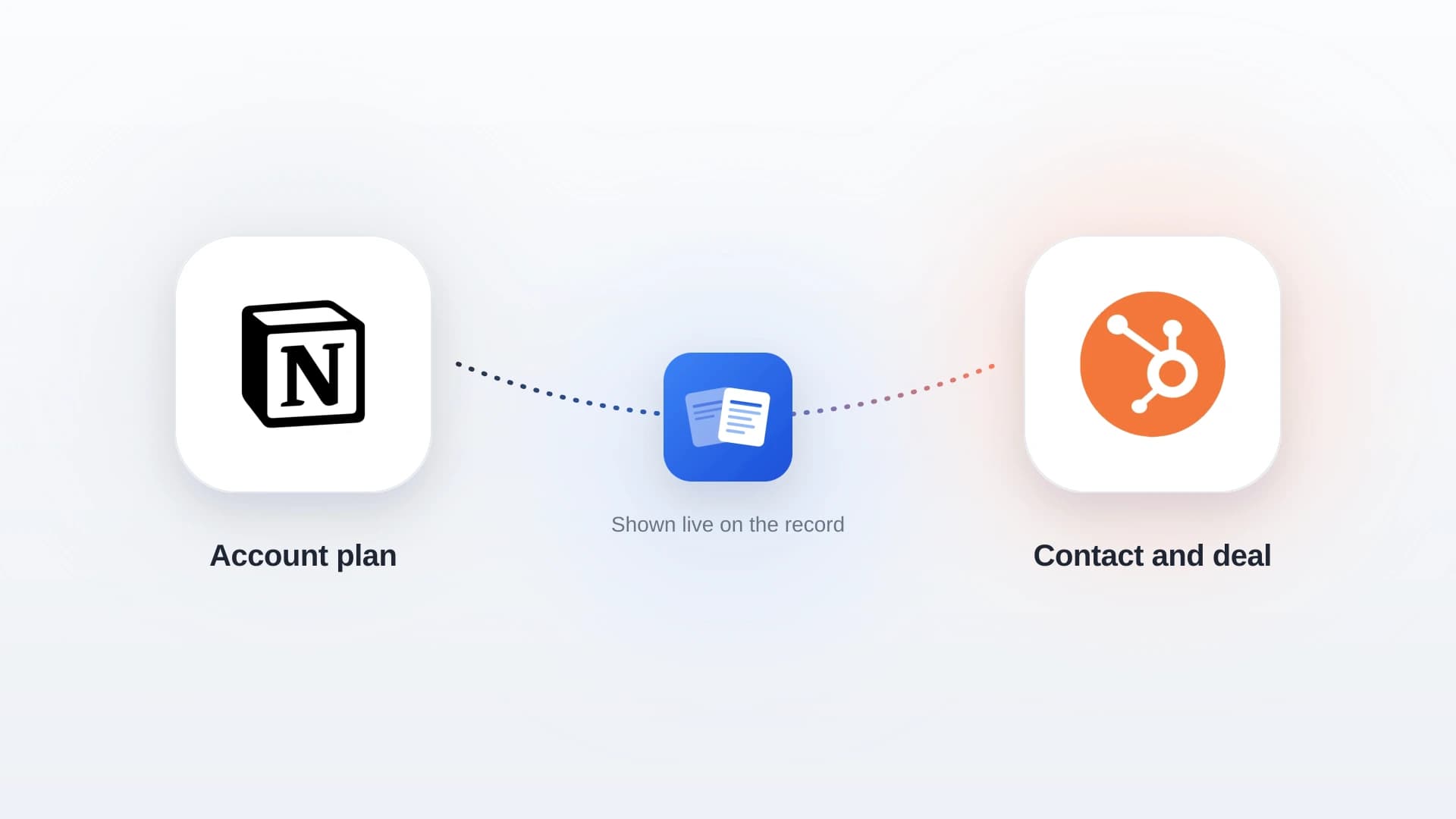
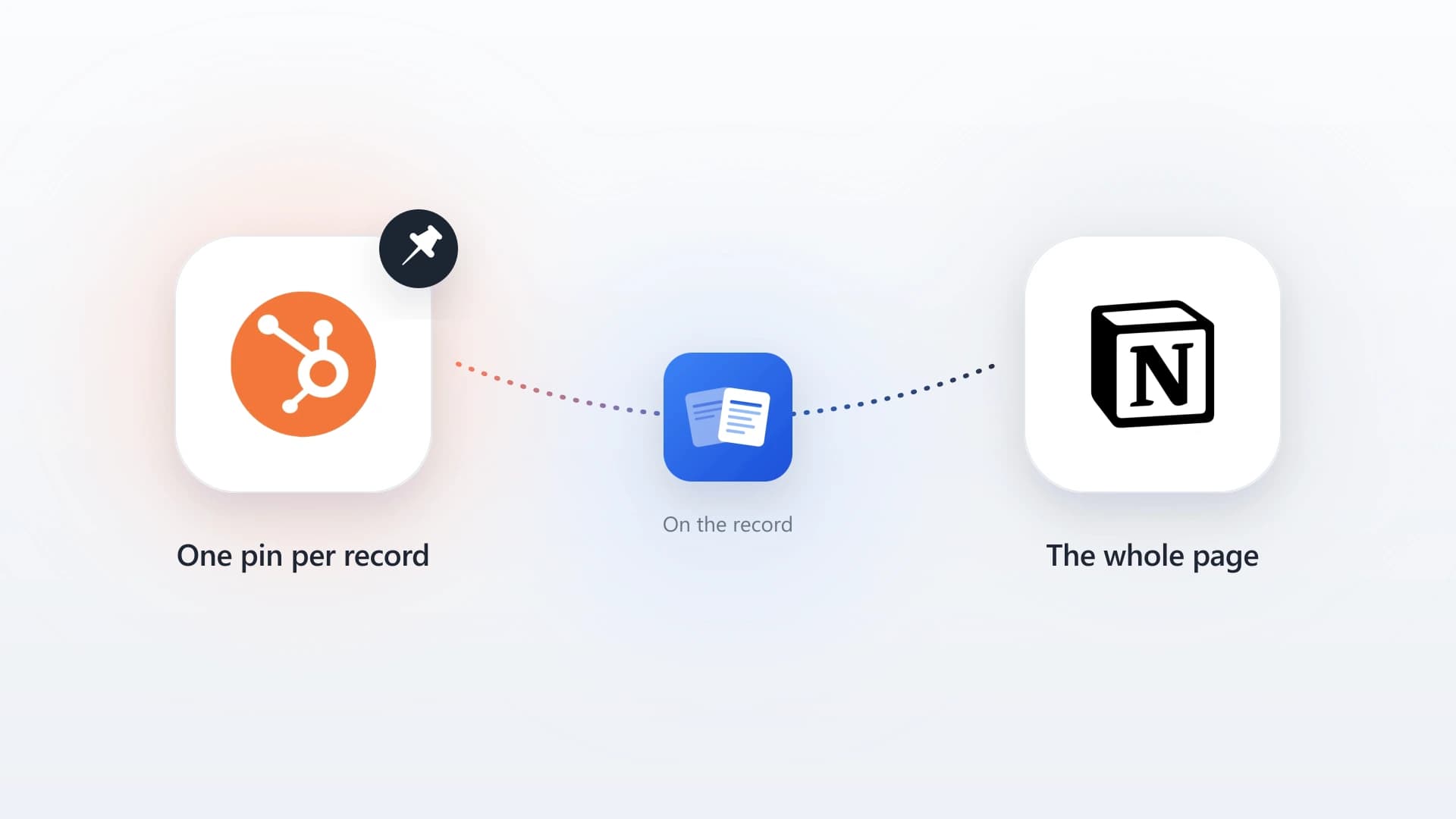
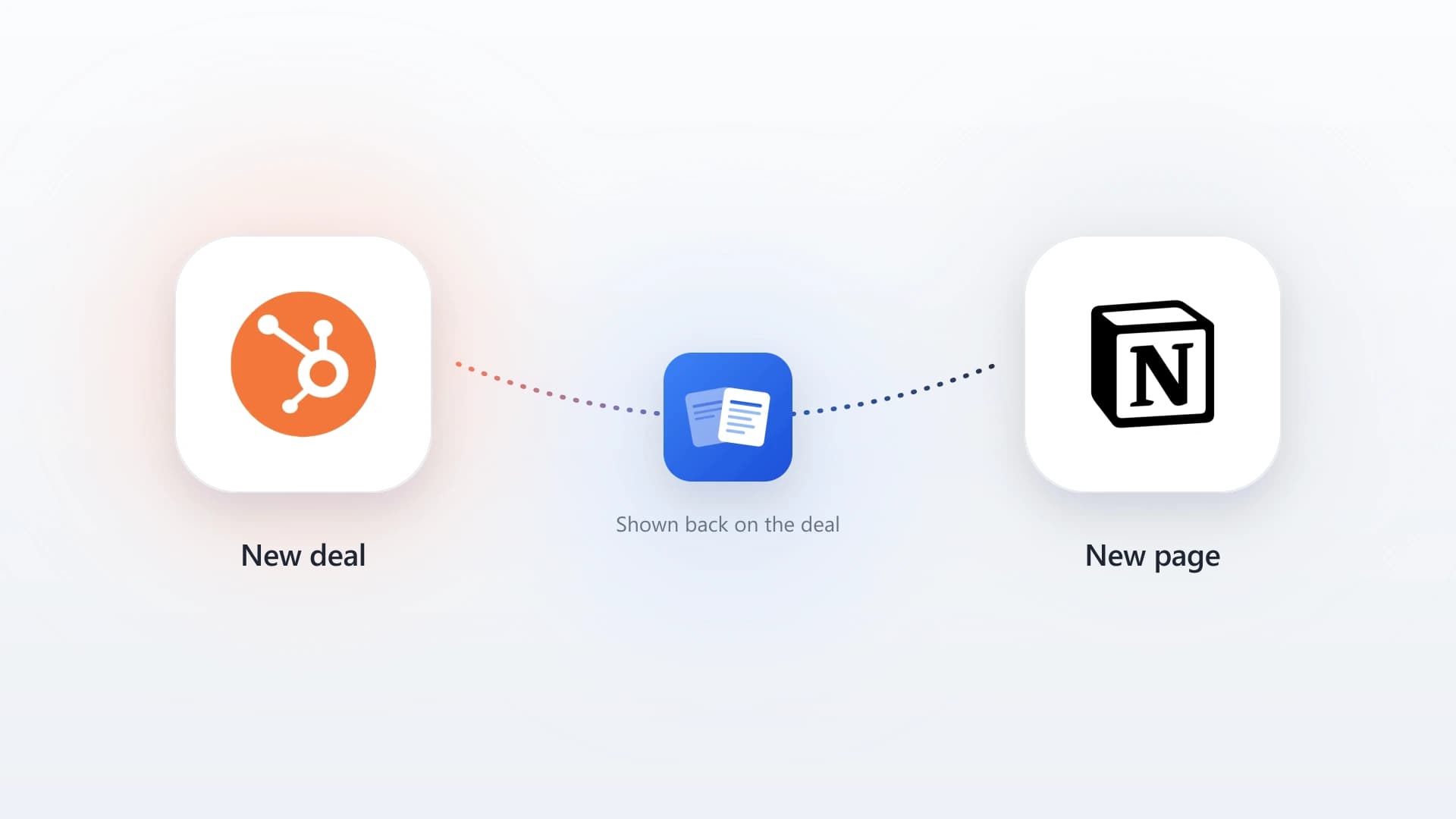
Build the discovery template in Notion, then use NoteLinker so those notes show up on the matching HubSpot contact and deal record. Answers stay where reps write and land where the team reads.
Fine for a short stub, but the flat text box makes a full, structured discovery write-up painful to scan and update.
Only if no one else will ever touch the account, since the notes stay disconnected from the contact and deal the rest of the team reads.
Getting discovery answers out of a silo and onto the record is the same problem we cover in five signs your sales notes are trapped in silos, and it is exactly what NoteLinker is built to fix.
Before your next discovery call
- Pick five or six openers from the eight categories, not all 40.
- Decide the two pain areas you most want to quantify.
- Have a structured place to capture answers as you go.
- End with a next step that names an owner and a date.
- Make sure the answers reach HubSpot, not just your notepad.
Get your Notion discovery notes onto the HubSpot record
NoteLinker surfaces the Notion database where your team captures discovery answers directly on the matching HubSpot contact and deal, so managers and AEs read the full context without copy-pasting.