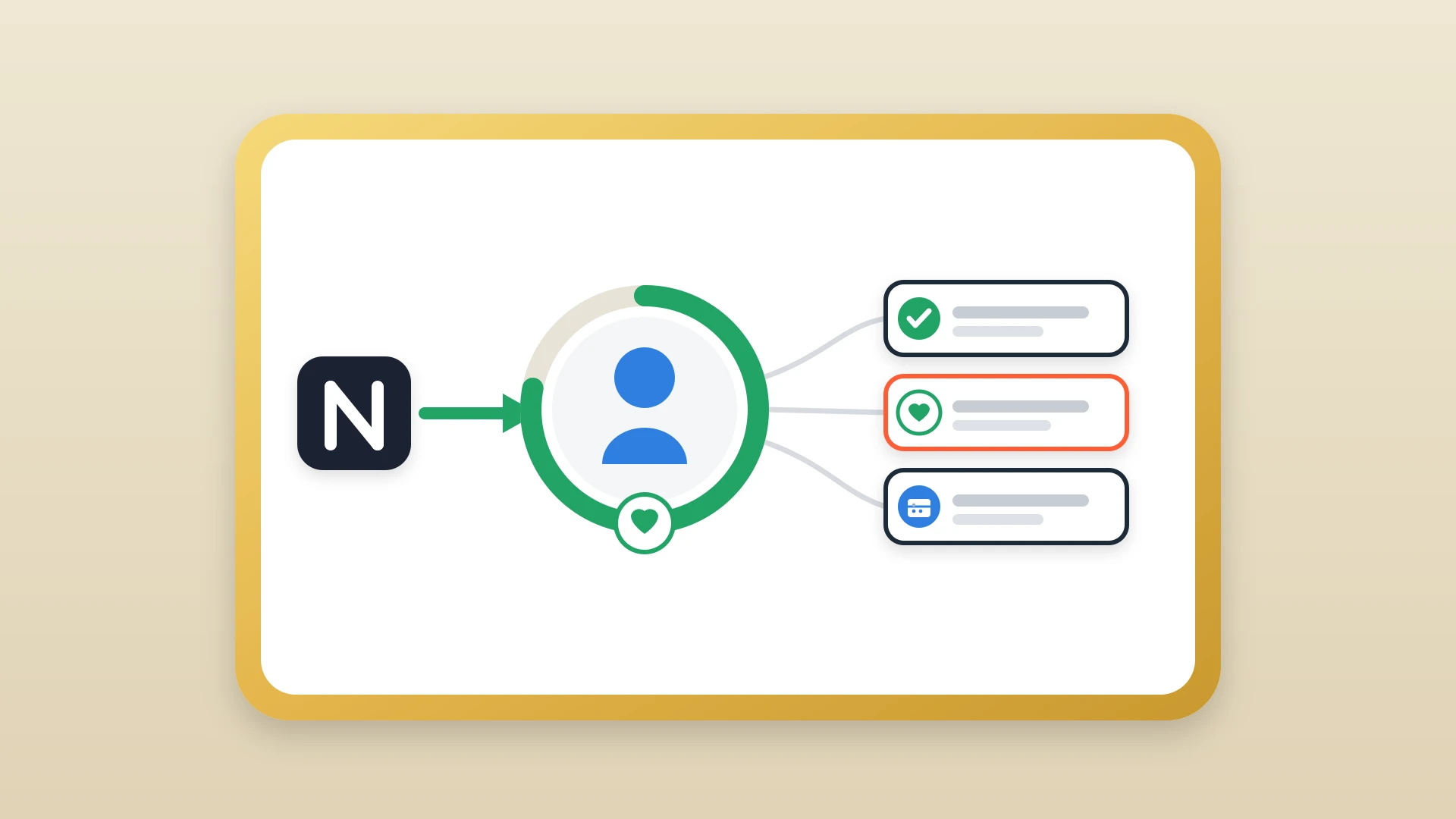

Notion has emerged as the premier space for strategic development because it allows for total creative freedom and knowledge compounding. Conversely HubSpot remains the gold standard for sales execution because it provides the guardrails and automation necessary to move deals through a pipeline.
Notion vs HubSpot at a glance
The point is not to crown one platform, but to match each job to the environment built for it.
An infinite canvas for account plans, org maps, and competitor research. Best when the work is non-linear and needs room to evolve.
Structured deal stages, automated sequences, and a single source of truth for pipeline health. Best when the work needs to be measurable.
Keep planning in Notion and execution in HubSpot, then sync the thinking across so the plan is visible at the moment of action.
In this article
1.
2.
3.
4.
5.
6.
7.
8.
9.
10.
In the modern revenue stack most teams struggle with a fundamental tension between where they think and where they act. Strategy requires a blank canvas that encourages deep work and flexible brainstorming while execution requires a rigid structure that ensures accountability and measurement. Trying to force both into a single platform usually results in a cluttered workspace that serves neither purpose well. Understanding the distinct roles of these two tools is the secret to building a high performing sales machine.
Strategy requires a blank canvas. Execution requires a rigid structure. Forcing both into one platform serves neither.
Notion as the Strategic Sandbox
Strategy is rarely a linear process that fits into a pre-defined CRM field or a drop down menu. It involves connecting disparate ideas and drafting long form account plans that require space to breathe and evolve. Notion provides an infinite canvas where sales teams can build complex wikis and collaborative research documents without the constraints of a database schema.
In Notion you can map out the organizational hierarchy of a target account or document a competitor's shifting market position. This environment encourages the kind of lateral thinking that leads to strategic breakthroughs and creative problem solving. It is the place where a sales team defines the "why" and the "how" of their approach before they ever pick up the phone. If your workspace is not yet set up for sales-focused documentation, see our guide to setting up your Notion workspace for sales teams.
Long-form account plans
Multi-stakeholder plans that need room to grow live comfortably on an open canvas instead of a cramped CRM field.
Organizational maps
Charting who reports to whom inside a target account is the kind of non-linear work Notion handles naturally.
Competitor research
Documenting a competitor's shifting market position rewards lateral thinking that a rigid schema would flatten.
HubSpot as the Engine of Execution
Once a strategy is defined it must be translated into a series of repeatable actions that can be tracked and measured. HubSpot is designed specifically for this level of operational excellence and provides the structure needed to manage hundreds of active leads. It is the environment where the theoretical plans created in Notion are put to the test in the real world.
HubSpot excels at managing the "what" and the "when" of the sales process through automated sequences and deal stages. It provides a single source of truth for the status of every prospect and the health of the overall pipeline. While Notion is where you plan the battle HubSpot is the command center where you actually fight it and track the casualties.
The Danger of Strategic Silos
A common mistake for growing teams is allowing their best strategic thinking to remain trapped inside Notion where it cannot influence daily activities. When an account executive spends hours researching a lead in Notion but fails to reflect that knowledge in HubSpot the execution suffers. Salesforce's 2024 State of Sales Report reported that sales reps already spend roughly 70 percent of their time on non-selling tasks like hunting for the right context and entering data. Asking them to also re-key strategy notes from Notion into HubSpot effectively guarantees the strategy never reaches the execution layer.
The gap between strategy and execution is where deals often fall through the cracks and revenue is lost. If the person responsible for the daily outreach cannot see the strategic plan the outreach becomes generic and ineffective. Bridging this divide is essential for ensuring that every action taken in the CRM is backed by a solid strategic foundation.
Why Structure Kills Creativity
The reason HubSpot is not the place for strategy is the same reason it is great for execution: its rigid structure. CRMs are built to aggregate data into reports and dashboards which requires strict adherence to specific formats. This environment is intentionally restrictive to ensure data integrity across thousands of records which is the opposite of what strategy requires.
If you try to draft a complex multi-stakeholder account plan inside a HubSpot note field you will quickly run into formatting limitations. The environment does not support the nesting of ideas or the embedding of diverse media types that Notion handles with ease. Forcing strategy into a CRM often leads to shallow thinking and a "check the box" mentality among sales reps.
What HubSpot's structure gives you
- Data integrity across thousands of records
- Clean reports and dashboards
- Repeatable, measurable sales actions
- A single source of truth for pipeline status
What that same structure costs strategy
- Formatting limits on complex account plans
- No deep nesting of ideas
- No embedding of diverse media
- A check-the-box mentality that flattens thinking
The Need for Contextual Execution
Execution without strategy is just noise. Strategy without execution is just a dream.
The most successful sales organizations in 2026 are those that have mastered the art of contextual execution. This means every email sent and every call logged in HubSpot is informed by the deep research and strategic planning housed in Notion. McKinsey's 2021 Next in Personalization survey found that 71 percent of customers expect companies to deliver personalized interactions and 76 percent get frustrated when they do not, with companies that personalize well generating 40 percent more revenue from those efforts than slower-growing peers. That kind of personalization only happens when the strategy from Notion is visible at the moment of execution.
When a sales rep opens a contact record in HubSpot they should immediately see the "why" behind the next step. This context transforms a routine task into a strategic move that is tailored to the prospect's specific situation. By keeping the strategy accessible during the execution phase you ensure that your team remains focused on the highest value activities.
Bridge your strategy in Notion to execution in HubSpot
NoteLinker pushes your Notion strategy notes into HubSpot timelines automatically. Reps see the plan when they pick up the phone.
Scaling Knowledge Across the Team
Notion acts as a living library of institutional knowledge that grows more valuable as more people contribute to it. It is the perfect place to store objection handling playbooks and post-mortem analyses of lost deals. This long-form content is vital for training new hires and keeping the veteran team members aligned on the company's evolving market approach.
HubSpot then takes that shared knowledge and applies it to the individual records in real time. While Notion holds the collective wisdom of the sales team HubSpot applies that wisdom to the specific deals currently in the funnel. This symbiotic relationship allows a company to scale its sales efforts without losing the strategic nuance that makes them successful.
Objection handling playbooks
Documented responses to common pushback give new hires a head start and keep veterans consistent.
Lost-deal post-mortems
Analyzing why deals slipped turns painful losses into shared lessons the whole team can learn from.
Evolving market approach
A living library keeps everyone aligned as the company's positioning shifts over time.
Creating a Unified Workspace
The goal of every modern revenue leader should be to create a unified workspace where information flows freely between the strategic and executive layers. You want your team to enjoy the creative process in Notion while benefiting from the operational rigor of HubSpot. Achieving this balance requires a conscious effort to integrate the two platforms into a single cohesive workflow.
When these two worlds are aligned the sales team experiences less friction and more clarity. They know exactly where to go when they need to think deeply and exactly where to go when they need to hit their numbers. This division of labor between the two tools allows each platform to do what it does best while supporting the overall growth of the business.
Signs your strategy and execution layers are aligned
- Reps know exactly where to think deeply and where to hit their numbers.
- Strategic research in Notion shows up on the matching HubSpot record.
- Nobody is re-keying the same notes into two tools.
- Daily outreach reflects the plan instead of defaulting to generic.
The NoteLinker Connection
The final piece of the puzzle is ensuring that the bridge between Notion and HubSpot is automated and invisible. Manually copying strategic insights from a Notion page into a HubSpot timeline is a tedious task that most sales reps will eventually ignore. This is why we created NoteLinker to act as the permanent link between your strategy and your execution.
NoteLinker allows you to keep your creative headspace in Notion while automatically populating your HubSpot records with the context they need. You can finish a strategic planning session in Notion and trust that those notes will be waiting for you in HubSpot when it is time to execute. It is the tool that ensures your best ideas are always present at the point of action. See how it works in our Notion to HubSpot sync guide. For a look at what other tools complement this workflow, see the best Notion integrations for sales teams.