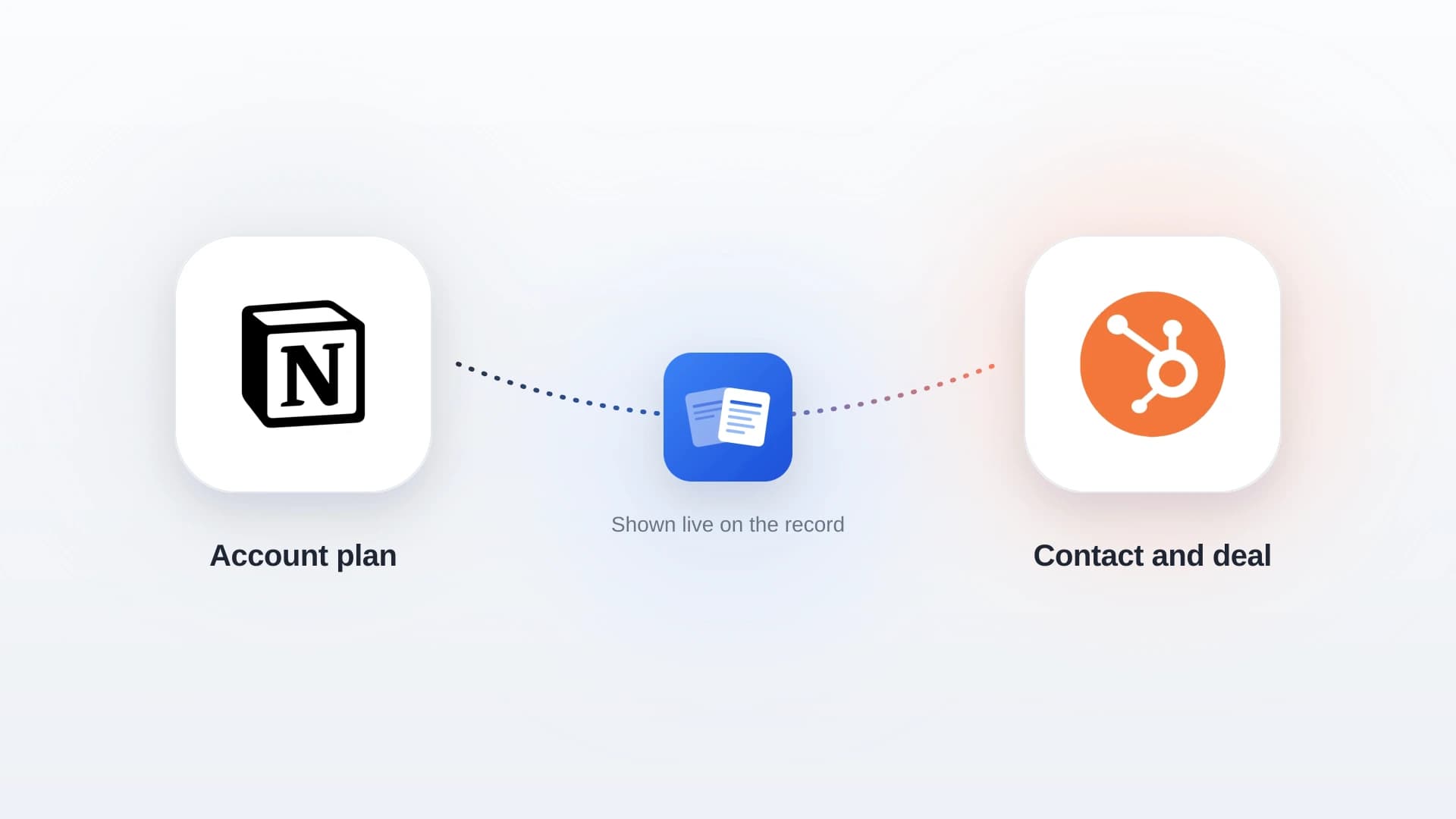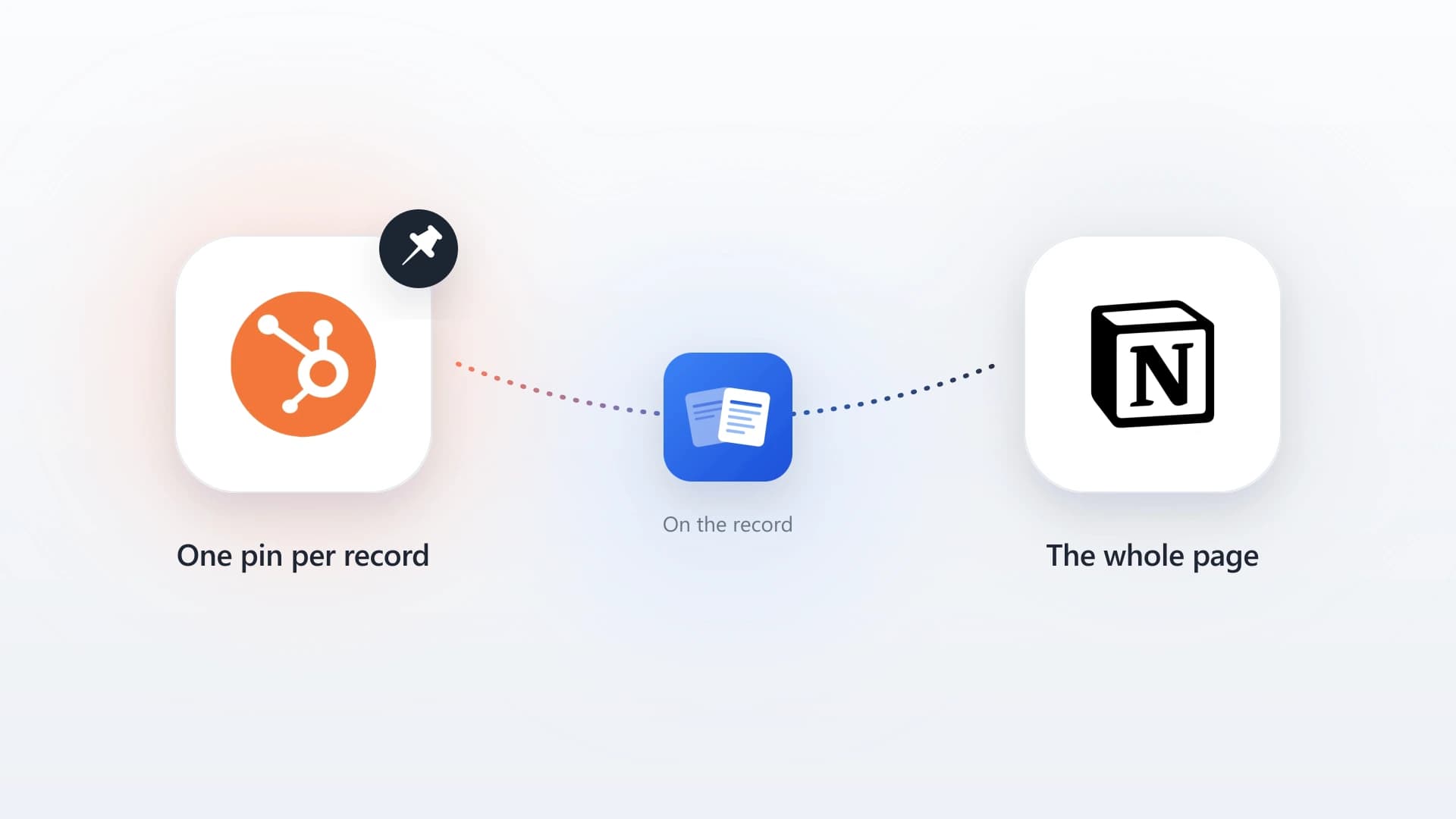

To sync Notion notes to HubSpot automatically, you need a sync that preserves formatting, attaches each note to the right HubSpot contact or deal, and adds no real friction to the rep's workflow. Teams usually try three approaches before a purpose-built tool like NoteLinker; for the NoteLinker setup steps, see the two-minute Notion to HubSpot guide.
The Three Ways Teams Try to Fix This (And Where Each Falls Short)
Teams try three ways to fix the Notion-to-HubSpot gap before they find something that sticks. Each solves a slice of the problem and leaves the core gap open.
Manual copy-paste
After a call, a rep copies their Notion notes into a HubSpot note or activity log by hand. This works until it doesn't. Reps skip it when they're busy, formatting gets lost, and the practice dies within a few weeks because it adds friction to an already full day.
Automation tools like Zapier or Make
These work well for structured data, like syncing a form submission or updating a field, but they struggle with rich Notion documents. You often end up with broken formatting, missing content, or a workflow that requires so much maintenance it becomes its own job.
The native HubSpot-Notion integration
This is mostly a read-only embed and doesn't push notes back into HubSpot timelines at all. It connects the two tools visually without closing the gap that actually matters.
Each of these solves a piece of the problem but leaves the core gap wide open. For the full landscape of ways to connect the two tools, see the complete Notion HubSpot integration guide.
What DIY automation gives you
- Full control over routing and field mapping
- No subscription to a dedicated tool
- Tunable to a very custom Notion structure
What it costs you
- Breaks when Notion changes its block types
- Strips rich formatting into plain text
- Becomes a maintenance job of its own
- Needs technical resources most teams do not have
In this article
1.
2.
3.
4.
5.
6.
What a Good Notion-to-HubSpot Sync Actually Looks Like
A sync that works for sales teams needs to meet a few specific criteria. Miss any one of them and adoption quietly collapses.
The three requirements of a sync that sticks
- Preserves the formatting of the original note, because a wall of stripped plain text is barely more useful than no note at all.
- Attaches the note to the right HubSpot contact or deal automatically, not just dumps it somewhere generic.
- Adds no meaningful friction to the rep's workflow, because if it does, adoption will collapse.
The closer your sync solution is to a single action the rep takes right after writing a note, the more likely it is to stick.
The underlying principle here applies regardless of what tool you use. Any multi-step process, login switch, or reformatting requirement is a place where the habit breaks. When evaluating any solution for this problem, including building your own, that friction threshold is the thing to optimize for first.
How Purpose-Built Tools Compare to DIY Automation
If you have a technical team and a specific workflow, building a custom Zapier or Make flow can work. The build itself follows a predictable shape.
- 1
Set the trigger
Watch for a Notion database property change, such as a status flipping to "Ready to Sync," so only finished notes fire the automation.
- 2
Map the page content to a note body
Translate the Notion page into the HubSpot note body, which is where most DIY setups struggle because Notion's API returns block-level content rather than ready-to-use text.
- 3
Stitch the blocks back together
Add the steps needed to reassemble headings, bullets, and bold text into readable formatting before anything reaches HubSpot.
- 4
Push to the right record
Use a lookup step to attach the note to the correct contact or deal so it lands on the matching record, not a generic feed.
Purpose-built tools like NoteLinker handle that translation layer for you, which is the part that breaks most DIY setups. The trade-off is control: a custom automation can be tuned to your exact database structure and naming conventions, while a dedicated tool gives you speed and reliability out of the box with less flexibility.
Why Sales Teams End Up Split Between Notion and HubSpot in the First Place
Notion and HubSpot serve genuinely different purposes, and that's why people use both. The split is not an accident or a sign anyone picked the wrong tool. It is the predictable result of two systems that are each excellent at a different job.
A rep who lives in Notion while the CRM is HubSpot knows the pain: you take detailed notes during a discovery call, and then those notes just sit there. They're buried in a private Notion page while HubSpot shows nothing but an empty activity timeline and a rep who looks like they've done no work at all. This disconnect is more costly than it seems. When deal context only lives in one person's Notion workspace, the whole team is flying blind. Managers can't coach effectively, handoffs become a scramble, and closed-lost deals often come down to nothing more than lost context at a critical moment.
HubSpot is built for structured data
Contacts, deals, pipelines, and activity logs. It is excellent at tracking what happened and when, but it is a poor environment for freeform thinking. Reps do not want to write in HubSpot any more than they want to write in a spreadsheet.
Notion is where thinking actually happens
Reps use it for pre-call research, meeting notes, account strategy, and follow-up planning because it is flexible and fast. It bends to whatever shape the rep needs in the moment.
The problem isn't that people are using the wrong tools. It's that nothing bridges the two naturally, so notes end up permanently siloed in whichever tool they were written in.
Building a Note-Syncing Habit That Actually Sticks
The best sync setup in the world fails if reps don't use it consistently. The teams that get this right treat note syncing the same way they treat CRM hygiene: it becomes part of the call wrap-up routine, not an afterthought.
The post-call wrap-up routine
- Notes written.
- Notes synced.
- Follow-up sent.
It also helps to make the value visible. When managers reference synced Notion notes in pipeline reviews and one-on-ones, reps quickly understand that their notes are being read and that the habit has a real payoff. The technology is only half the equation. The other half is making sure the team can see why it matters, which turns a tool into a workflow and a workflow into a competitive advantage.
The technology is only half the equation. The other half is making sure the team can see why it matters.
For a step-by-step walkthrough of the setup process, see our two-minute Notion to HubSpot guide. If you also need to move an existing contacts database from Notion into HubSpot, see how to sync Notion contacts to HubSpot.
Skip the copy-paste and sync Notion notes to HubSpot in one click
NoteLinker pushes your Notion pages onto the right HubSpot contact or deal timeline with formatting intact. Two-minute setup, no Zaps to maintain.